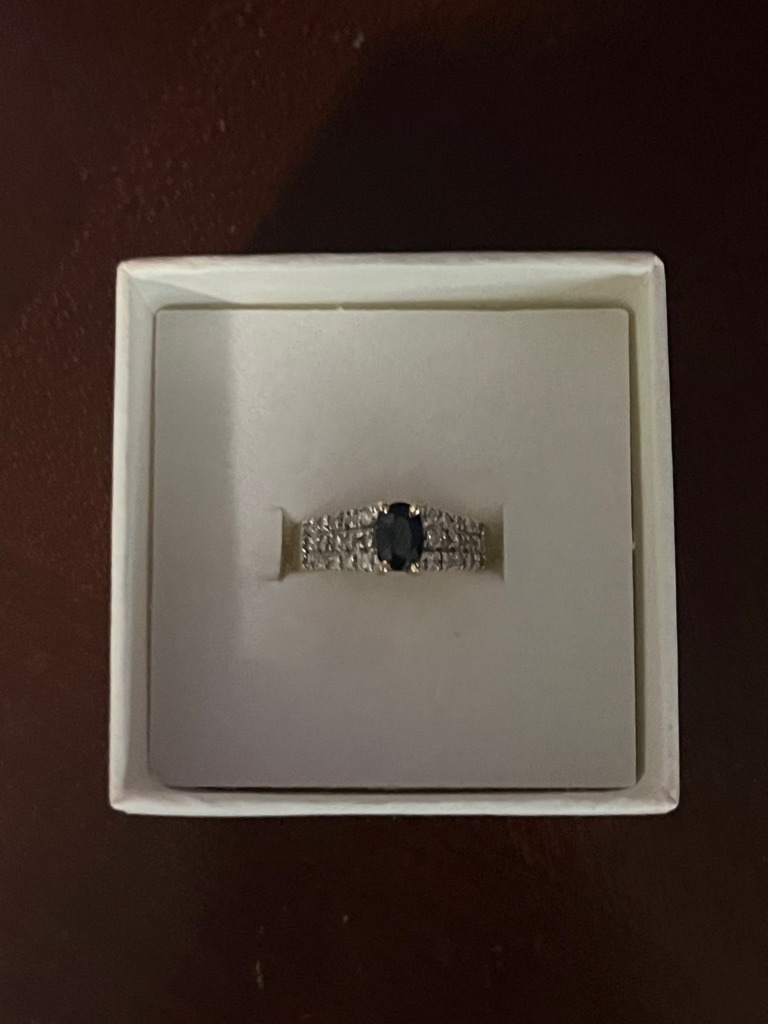
Vintage Oval Blue Sapphire and Diamond Multi-Row Ring (c. 1970–1990)
Unknown commercial jeweler or manufacturer (requires internal band inspection for maker's marks)
Era
Late 20th Century, Retro/Modern Era, circa 1970–1990
Origin
Likely United States or Europe, commercial fine jewelry production
Maker
Unknown commercial jeweler or manufacturer (requires internal band inspection for maker's marks)
Condition
Appears to be in very good to excellent estate condition based on visual inspection within the box, showing intact prongs and well-aligned stones
Rarity
Common commercial production, though specific styling reflects popular mid-to-late 20th-century luxury aesthetics
Est. Value
$300 to $1,200 USD, heavily dependent on the metal weight, carat size, natural versus synthetic origin of the sapphire, and diamond quality/clarity
Heads up: This report is generated by AI and may be inaccurate. It is not a professional appraisal or authentication. For valuable pieces, confirm with a grading service (PSA, PCGS, CGC, NGC). Value estimates are rough market references, not financial advice.
In a Nutshell
A classic, elegant piece of estate fine jewelry offering timeless aesthetic appeal and versatile wearability, best appreciated for its personal sentiment and traditional craftsmanship rather than high-end investment speculation
Where It Comes From
Multi-row diamond and colored gemstone rings gained immense popularity throughout the 20th century as accessible luxury items, often purchased to mark anniversaries, milestones, or as engagement ring alternatives following the historic popularity sparked by royal engagement rings
Things Worth Knowing
Blue sapphires have historically symbolized wisdom, loyalty, and nobility, making them a perennial favorite for commitment and milestone rings
What It's Made Of
Precious metal (likely 14k white gold or platinum), natural or lab-created blue sapphire center stone, and round brilliant-cut diamond accents
Size & Specifications
Standard multi-row ring silhouette featuring a prominent central oval-cut gemstone flanked by pave-set or channel-set accent stones across a tiered band
Telltale Marks
Interior band typically holds metal purity stamps (e.g., '14K', '18K', or 'PLAT') and potential maker's hallmarks, which are currently obscured in the box presentation
Edition & Variant
Standard commercial fine jewelry production line rather than a limited edition
Is It the Real Thing?
Likely genuine fine jewelry, though gemstone treatments (heat treatment for sapphire) are standard and expected. Professional gemological testing is required to confirm whether the center stone is a natural or synthetic sapphire and whether the accent stones are genuine diamonds.
Versus Known Examples
Consistent with traditional mid-to-late 20th-century cocktail and engagement ring designs featuring a central colored gemstone enhanced by diamond shoulders
Watch Out For
No visible red flags from the exterior image, but potential buyers should always inspect the interior for metal stamps and check for loose prongs or replacement stones
Want It Verified?
GIA (Gemological Institute of America) or an independent certified gemologist for stone identification and appraisal, though formal grading is usually reserved for high-value investment pieces
Display & Preservation
Store in a lined jewelry box or individual velvet pouch away from harder gems to prevent scratching; keep away from harsh household chemicals and ultrasonic cleaners until gemstone treatments are verified
Care & Handling
Clean gently with warm water, mild dish soap, and a soft-bristled brush; avoid wearing during rigorous physical activities to protect the prong settings
If You Love This, Look For
Art Deco sapphire rings, Victorian cluster rings, mid-century cocktail rings, and modern birthstone fine jewelry
Tracing Its Past
Estate jewelry generally lacks formal provenance unless accompanied by original retail receipts, family history, or professional gemological certificates
Rarity
Common commercial production, though specific styling reflects popular mid-to-late 20th-century luxury aesthetics
Ballpark Value
$300 to $1,200 USD, heavily dependent on the metal weight, carat size, natural versus synthetic origin of the sapphire, and diamond quality/clarity
How the Market's Moving
Vintage and estate fine jewelry has experienced steady demand driven by sustainable shopping trends, unique aesthetic preferences, and appreciation for classic craftsmanship over modern mass-produced items
Long-Term Outlook
Moderate store of value based primarily on precious metal and gemstone melt/market value rather than speculative appreciation